Over the past century, the U.S. construction industry has undergone a transformation unlike any other. In the early days, construction cost estimation relied on hand-drawn blueprints, manual calculations, and personal experience. Estimators spent hours crunching numbers, referencing outdated price lists, and preparing complex spreadsheets, a process prone to human error and time delays.
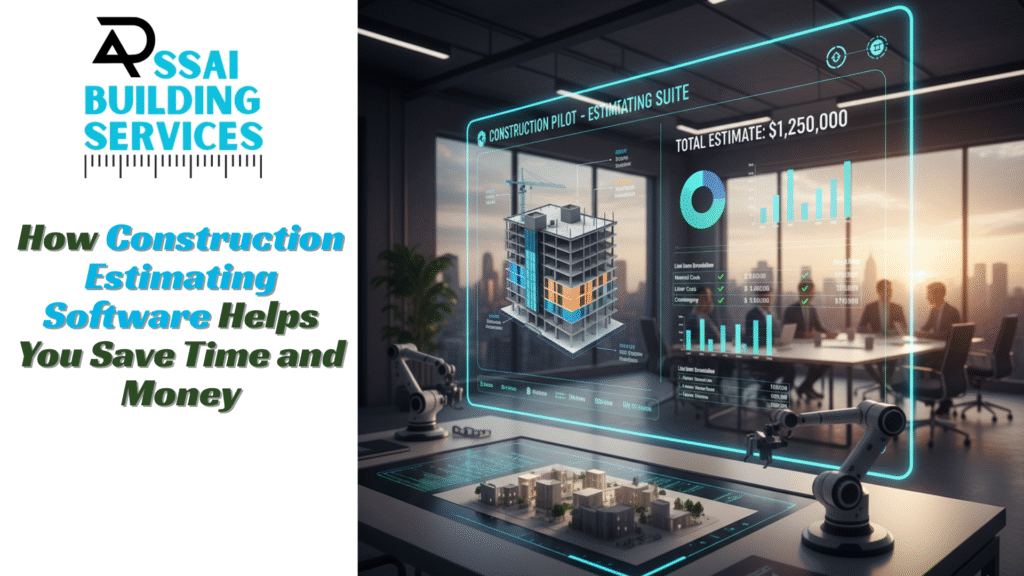
Fast forward today, and the landscape has changed dramatically. The rise of construction estimating software has reshaped how professionals handle project budgets, timelines, and resource allocation. From small residential builds to billion-dollar infrastructure projects, estimators now rely on digital tools that bring speed, precision, and transparency to the estimating process.This evolution has made construction estimating services more accurate, collaborative, and cost-effective helping contractors, developers, and owners make smarter financial decisions across all phases of construction.
The Role of Estimating Software in Modern Construction
Construction estimating software automates what was once a tedious, manual process. Instead of flipping through paper drawings or using static Excel sheets, estimators can now upload digital blueprints, perform Quantity TakeOffs, and generate detailed reports within minutes.
Whether you’re estimating plumbing, electrical, HVAC, or structural work, these digital tools allow users to calculate material quantities, labor costs, and overhead expenses in real time. The result? Accurate construction cost estimation service that helps minimize errors and maximize profitability.
For example, an estimator can use integrated cost databases like RSMeans or Craftsman to get up-to-date local pricing making sure that every construction estimate reflects real market conditions across U.S. states.
Time-Saving Advantages of Construction Estimating Software
One of the biggest challenges in traditional estimating was time management. With tight deadlines and multiple bids to prepare, even experienced estimators faced pressure to balance speed with accuracy.
Modern construction estimating software eliminates this bottleneck. Automated takeoffs and pre-built construction estimate templates reduce repetitive work, allowing teams to focus on strategy instead of data entry. Estimators can compare multiple design options instantly and share live updates with architects or clients, a level of collaboration that was nearly impossible just a decade ago.
This digital workflow doesn’t just save time it also enhances communication, reduces rework, and streamlines approvals. For companies like Rassai Builder Service, technology ensures that every client receives reliable, fast, and detailed cost insights for both residential and commercial projects nationwide.
Financial Benefits: Reducing Waste and Increasing Profitability
Accuracy in estimating equals savings on-site. A small error in calculating material quantities can lead to thousands of dollars in lost profit. Construction estimating software prevents such mistakes by integrating live pricing updates, automated formulas, and predictive analysis.
For contractors bidding on multiple projects, these tools improve bid accuracy and win rates. By using reliable cost data and standardized templates, estimators can confidently produce bids that align with client budgets and current market trends.
For example, during new construction plumbing projects, advanced estimating tools can calculate fixture counts, pipe lengths, and fitting costs automatically reducing the risk of over-ordering. (You can learn more about detailed plumbing estimation in our guide: Construction Plumbing Cost Estimation.
Boosting Estimator Productivity and Skill Development
Another major benefit of software adoption is workforce efficiency. With the right tools, one estimator can manage multiple large-scale projects at once, significantly lowering overhead costs.
This shift has also elevated the construction estimator salary, as demand grows for professionals who can combine technical expertise with digital proficiency. According to recent U.S. data, experienced estimators using advanced software earn 20–30% more than those relying on manual methods.Aspiring professionals often ask, “How to become a construction estimator?” The answer lies in mastering both traditional construction knowledge and digital estimating platforms like Bluebeam, PlanSwift, and Autodesk Revit. These skills open doors across the residential, commercial, and industrial sectors.
Enhancing Collaboration Through Digital Integration
Modern projects involve multiple stakeholders architects, engineers, contractors, and owners. Estimating software bridges the gap between these teams through real-time collaboration.
Cloud-based platforms allow everyone to view the same data simultaneously, reducing miscommunication and ensuring project alignment. In complex jobs, estimators can also integrate Architectural 3D Rendering services to visualize cost impacts before construction begins. This level of integration not only saves time but also provides clarity, helping decision-makers plan confidently and allocate budgets efficiently.
Why Rassai Building Services Trusts Digital Estimation
With years of experience providing construction cost estimation services USA, Rassai Building Services combines expert judgment with advanced digital tools to deliver fast, precise, and transparent results.
The company’s in-house estimators handle CSI Divisions 1–10 & 22–24, covering everything from general construction to mechanical and plumbing systems. By leveraging cutting-edge software and verified cost databases, Rassai ensures clients receive comprehensive reports that reflect real-world market conditions.No matter where your project is located from California to Florida you can explore Rassai’s full-service coverage here:
View U.S. Coverage on Google Maps
How to Estimate Construction Costs Effectively
If you’re wondering how to estimate construction costs for your next project, here’s what modern estimators focus on:
-
- Accurate Quantity Takeoffs: Measure every unit of material, from cubic yards of concrete to linear feet of piping.
-
- Labor Cost Analysis: Include hourly rates, crew productivity, and overtime allowances.
-
- Equipment and Overheads: Account for rentals, fuel, and insurance costs.
-
- Contingency and Profit Margins: Balance competitiveness with sustainability.
Software helps automate these steps while maintaining full accuracy and compliance with local construction standards.
Building the Future of Cost Estimation
As technology continues to evolve, the construction industry’s future depends on innovation and adaptation. Estimating software is not replacing human expertise — it’s enhancing it. The combination of digital accuracy and professional judgment leads to better bids, smarter budgeting, and more successful projects.
Companies like Rassai Building Services represent this evolution — blending decades of experience with modern estimating tools to create reliable, efficient, and cost-saving solutions for builders across the U.S.