Architecture has always been about vision turning ideas into reality, and drawings into structures. In the past, clients relied on flat sketches and technical plans to imagine how a building might look.
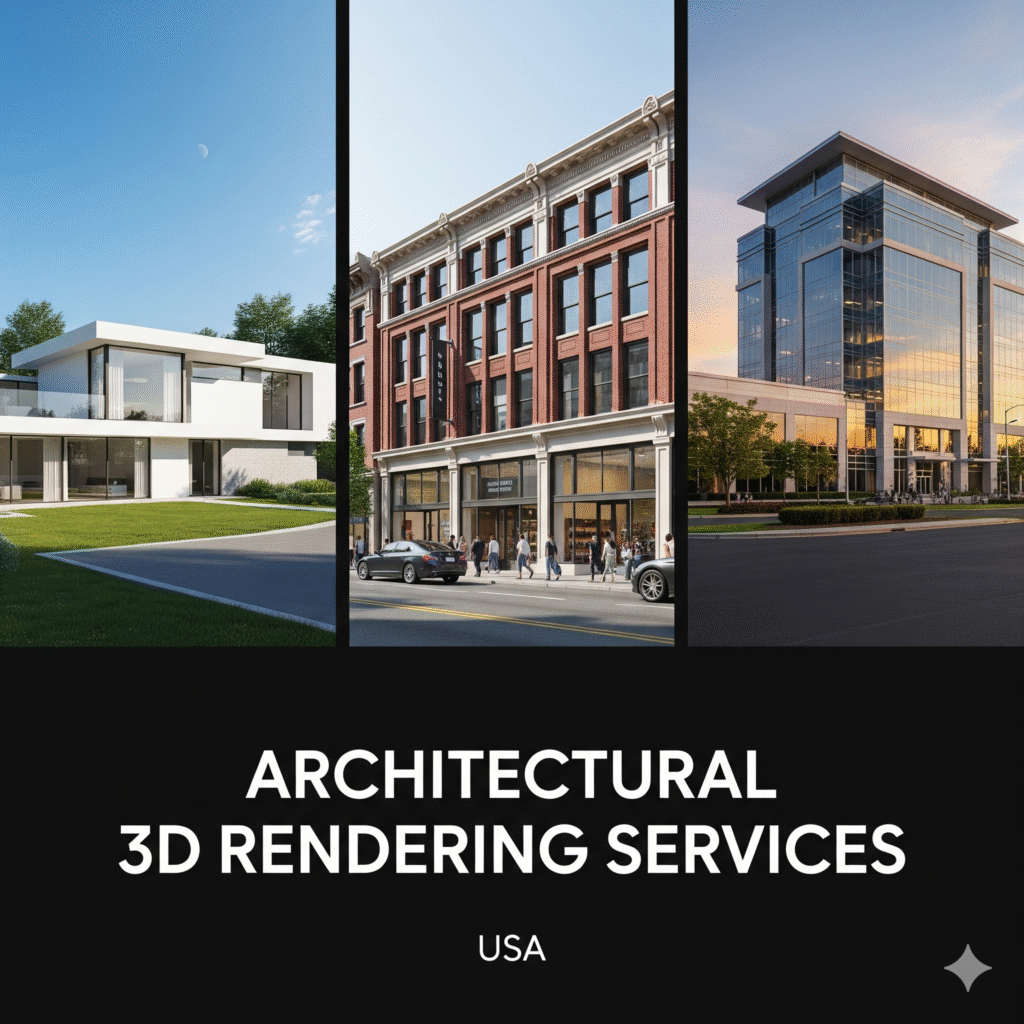
Today, thanks to 3d rendering services, that imagination is no longer guesswork. Photorealistic 3D models allow owners, contractors, and developers to see a project before the first brick is laid, reducing risks, saving costs, and improving communication.
From Sketches to Photorealism: The History of Rendering
In the early 1900s, architects relied on watercolor sketches and hand-drawn perspectives to illustrate designs. These drawings were beautiful but often inaccurate, leaving clients unsure of how their buildings would actually look.
The arrival of CAD (Computer-Aided Design) in the late 20th century marked a turning point. Architects could now create precise digital drawings, yet the images were still flat and abstract. As technology advanced, 3D modeling emerged, allowing for basic block forms and conceptual models.
Today, 3D architectural rendering services deliver photorealistic images that capture materials, textures, lighting, and even surrounding landscapes. A client can walk through a proposed office, school, or home virtually—long before construction begins. This evolution has transformed not only design but also construction planning, sales, and investor confidence.
The Value of Architectural 3D Rendering in Construction
Rendering is no longer just about visuals—it is a core decision-making tool. For contractors, developers, and owners, 3D visualization solves several critical challenges:
- Clarity for Stakeholders: Not every client can read technical blueprints. Renderings bridge the gap, showing a lifelike representation of the final project.
- Improved Budgeting: By visualizing finishes, materials, and layouts, clients can finalize choices early, reducing costly mid-project changes.
- Enhanced Marketing: Developers use photorealistic renderings to attract buyers and investors before construction begins.
- Time Savings: Quick approvals and fewer design revisions streamline the construction timeline.
This integration of architectural 3D rendering with construction estimating services ensures that what you see in a rendering aligns with both design intent and budget realities.
Architectural 3D Rendering and Quantity TakeOffs
At Rassai Building Services, we specialize in Fast. Accurate. Affordable Estimates. Alongside cost estimating and Quantity TakeOffs services, our 3D Rendering Service bring designs to life, empowering decision-makers with clarity and confidence. we know that a rendering is only powerful when it connects to accurate numbers. That’s why our visualization services often work hand-in-hand with Quantity TakeOffs services.
For example, if a rendering shows a façade with natural stone, the Quantity TakeOff precisely measures how much stone is required, while our estimating team calculates costs based on U.S. market prices. This integrated approach ensures that the stunning images clients see are grounded in financial accuracy, not just aesthetics.
Why Choose Professional 3D Rendering Services in USA
Many design teams attempt in-house rendering, but without specialized skills, results are often generic and unrealistic. Professional rendering firms combine advanced software (3ds Max, Lumion, V-Ray, Revit) with architectural knowledge, producing images that are not only beautiful but also technically correct.
At Rassai, our team has worked across residential, commercial, and industrial projects nationwide. Whether it’s an apartment complex in Florida, a hospital in Texas, or a retail space in California, we tailor renderings to meet each client’s unique needs. This attention to detail helps clients avoid misunderstandings, impress stakeholders, and make faster decisions.
Outsourcing Architectural Rendering: A Growing Trend
Outsourcing has become increasingly popular in the U.S. construction market. Instead of maintaining expensive in-house design visualization teams, contractors and developers turn to specialized firms.
By outsourcing 3D rendering services in USA, clients gain:
- Cost Savings: Pay only for the services needed.
- Expert-Level Quality: Access professionals skilled in both design and visualization.
- Scalability: Handle multiple projects simultaneously without hiring additional staff.
- Faster Turnaround: Get high-quality renderings within days, supporting faster decision-making.
For small and mid-sized contractors, outsourcing provides a competitive edge in bidding, marketing, and client presentations.
Future of 3D Rendering in the U.S. Construction
The next decade will see real-time rendering, VR (Virtual Reality), and AR (Augmented Reality) become standard in U.S. construction. Clients will not only see but also experience projects before construction begins, walking through virtual spaces and making live design adjustments.
AI-powered rendering tools are also on the rise, reducing manual work and enabling faster visualization. However, just like with estimating, human expertise remains vital. Technology can generate images, but only professionals can ensure accuracy, feasibility, and alignment with construction codes.
At Rassai, we are already integrating these tools into our services, offering clients future-ready solutions while maintaining the expertise and judgment that come from decades of experience.
FAQs on Architectural 3D Rendering Services USA
1. What is Architectural 3D Rendering?
It is the process of creating photorealistic images of a building or space before it is constructed, using advanced software and design expertise.
2. How does 3D rendering help in construction?
It improves communication, supports budgeting, reduces revisions, and accelerates project approvals by showing realistic visuals.
3. What industries benefit most from rendering?
Residential, commercial, healthcare, educational, and industrial projects all benefit, as renderings support both design and marketing.
4. Can 3D rendering save costs?
Yes. By finalizing design choices early, clients avoid costly mid-project changes, disputes, and delays.
5. Why outsource 3D rendering services?
Outsourcing provides expert quality, faster delivery, and cost savings compared to maintaining in-house visualization teams.